

PatientTrac Companion | Reimbursement Series
Last business day of the month. The care coordinator has a sticky note covered in tally marks and a phone log that shows call durations but not what the calls were about. She is trying to reconstruct one patient's month. The pharmacy call was about eight minutes, she thinks. The transportation arrangement was perhaps six.
Those minutes are the unit Medicare pays in, and approximate minutes do not qualify.
CPT 99490 requires at least 20 minutes of clinical staff time, directed by a physician or other qualified healthcare professional, per calendar month. The patient must have two or more chronic conditions expected to last at least 12 months or until death, placing them at significant risk of death, acute exacerbation, or functional decline. In 2021, CPT added code 99439 for each additional 20 minutes of clinical staff time, and 99490's definition changed from "20 minutes" to "first 20 minutes."
Time is not the only requirement. Patient consent and a comprehensive care plan, including a problem list, measurable treatment goals, planned interventions, and medication management, must be documented in the EHR.
Every practice that bills time-based care management faces the same documentation burden. The minutes must be real, attributed to the right person, and tied to activities in the care plan. A month reconstructed on the last day from a sticky note is the weakest record a practice can submit.
Care-management software usually solves this with a manual timer the coordinator remembers to start. The timer tracks minutes but not what happened during them. Care-plan activity and patient messages live somewhere else.
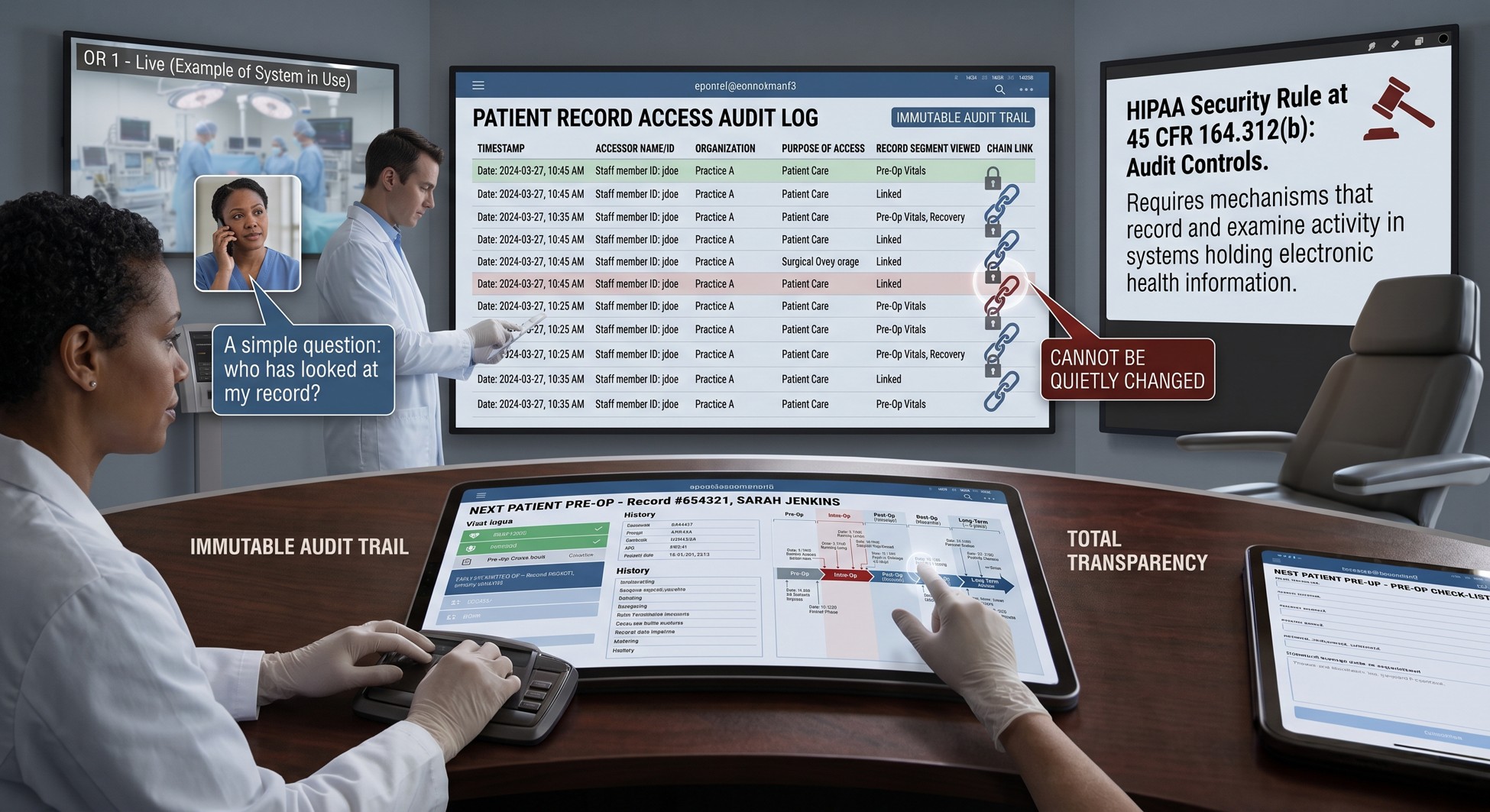
PatientTrac Companion's Care Management mode is designed to capture time at the point of work. When the coordinator opens the patient's thread, answers a question, or updates the care plan, the activity and its duration are logged together. At month's end, the engagement summary already exists, along with the audit trail showing who did what and when.
The coordinator's sticky note has eighteen minutes on it, maybe twenty-two. The claim depends on which number she can actually prove.
Primary Sources
- CMS — Chronic Care Management Services (MLN909188)
- CMS — Chronic Care Management Frequently Asked Questions
Explore the Remote Care Perspectives Series
- Section overview
- 1. "Does Medicare Pay for This App?" Is the Wrong Question
- 2. What $110 a Month Actually Buys in Oncology
- 3. CMS Requires ePROs but Doesn't Pick Your Vendor
- 4. The 2 A.M. Call
- 5. Why Typing Your Symptoms Isn't Remote Monitoring
- 6. The Short-Burst Recovery Window
- 7. Minutes Are Money, If You Can Prove Them
- 8. Canada: Ten Provinces, Ten Rulebooks
- 9. The NHS Doesn't Bill. It Commissions.
- 10. Reimbursement as a Feature, Not a Promise