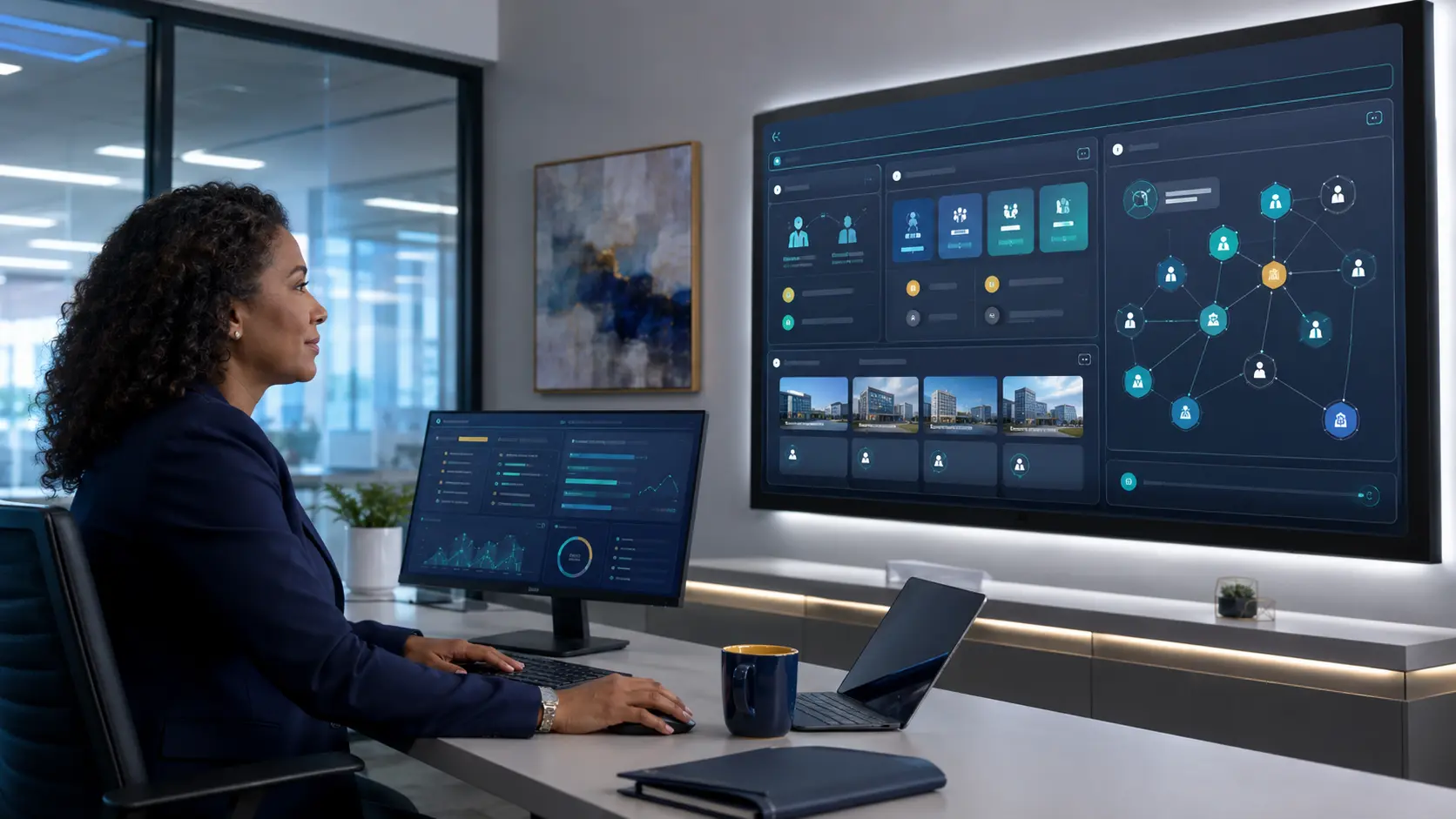
Organization onboarding & network administration
Hub
Enroll the organization, configure sites and teams, assign governed role-based access, and activate the applications each location needs.
Explore Hub →
PatientTrac unifies practice operations, intelligent intake, specialty documentation, TeleMed, ambulatory surgery, revenue cycle, and recovery across eight purpose-built applications on one secure clinical spine.
PatientTrac does not force every discipline into one generic screen. Each application owns a distinct part of the work while sharing the same patient, encounter, access, and audit foundation.
Enroll the organization, configure sites and teams, assign governed role-based access, and activate the applications each location needs.
Explore Hub →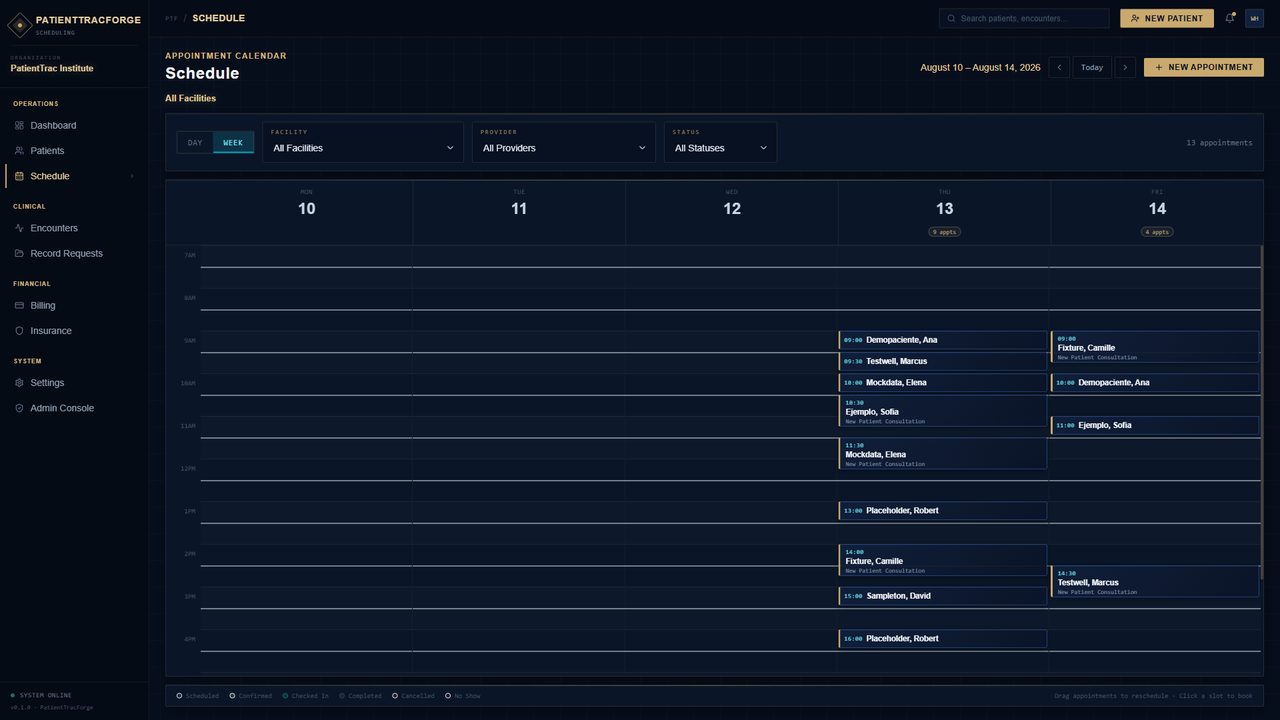
The operational center for registration, scheduling, schedule-linked preauthorization, check-in, encounter routing, EDI claims, remittance, denials, and accounts receivable.
Explore Forge →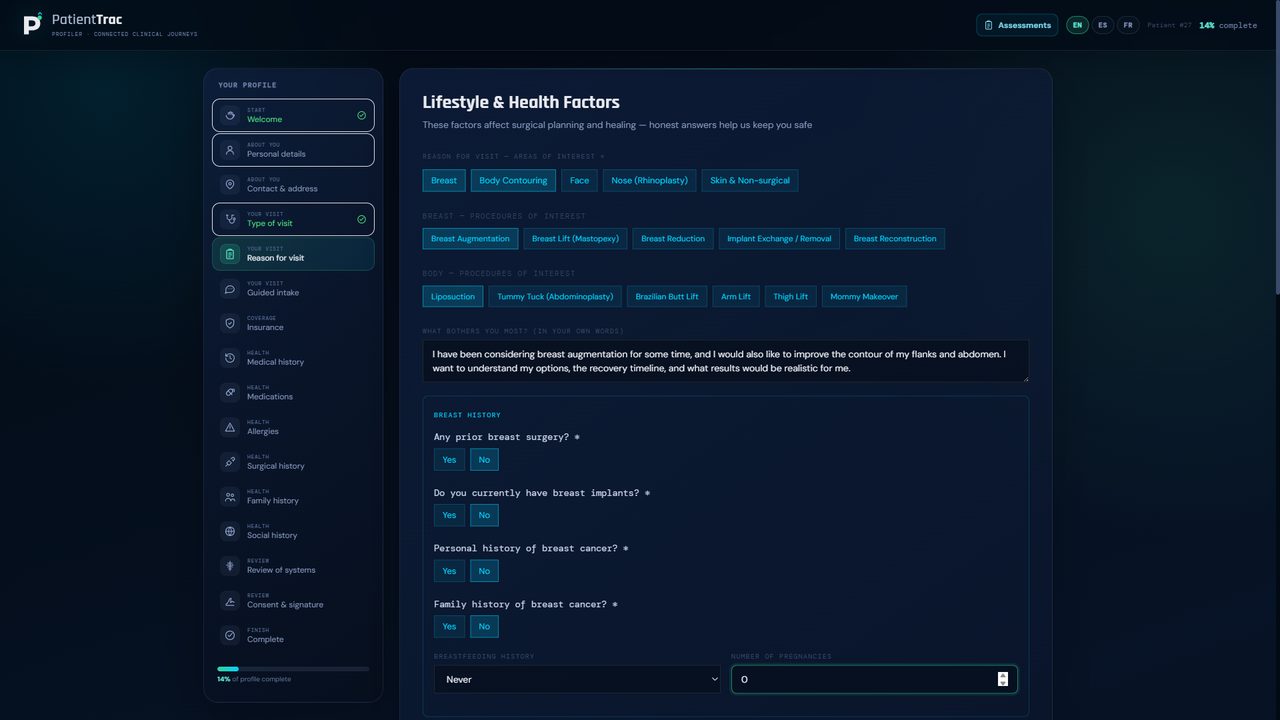
The intake layer for the entire PatientTrac ecosystem — histories, assessments, documents, consents, and risk signals gathered before the visit and prepared for clinician review.
Explore Profiler →Every application below reads and writes the same governed patient and encounter record. Intake flows to the visit, the visit to surgery, surgery to billing, and billing to recovery — without re-keying the chart.
How the platform works →
A longitudinal neurobehavioral record for evaluations, mental status examination, therapy documentation, neurology, treatment planning, safety workflows, and TeleMed.
Explore Mind →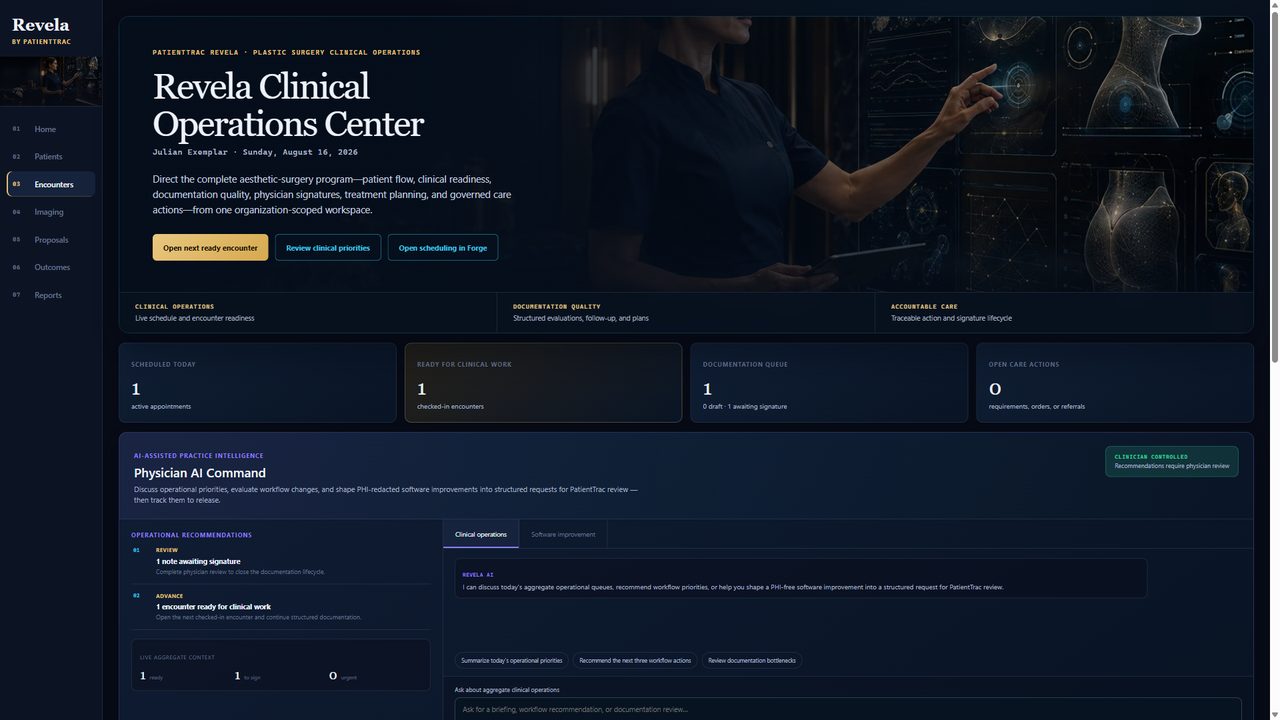
The complete aesthetic and reconstructive journey — consultation, photography, examination, readiness and risk, proposals, procedural documentation, outcomes, and follow-up.
Explore Revela →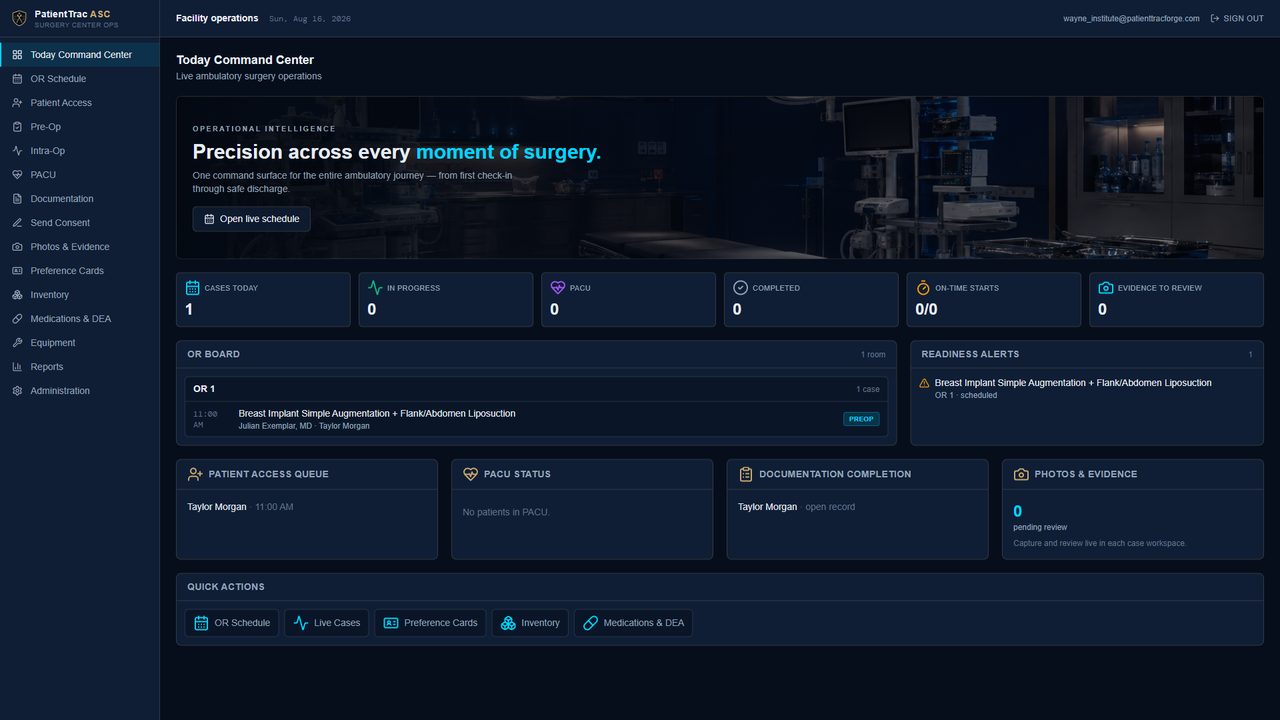
The live operational floor — cases, rooms, rosters, inventory, sterile processing, controlled substances, utilization, and case economics.
Explore ASC →
One structured clinical record across pre-op, anesthesia, the procedure, implants, medications, recovery, discharge, and the final operative documentation.
Explore Continuum →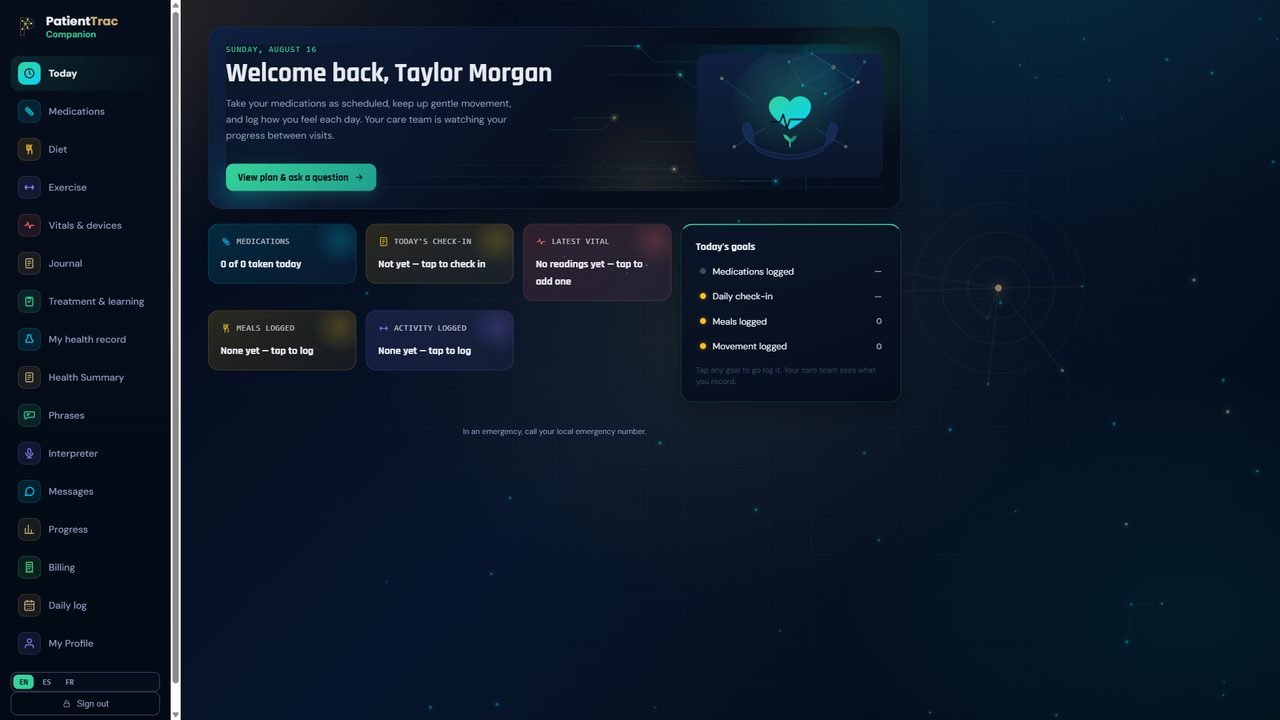
The patient's mobile connection to care — coverage and authorization information before the visit, then care plans, medications, supported vitals, recovery check-ins, messaging, and guardrailed Ask AI at home.
Explore Companion →The applications change because the work changes. The patient and encounter identity do not.
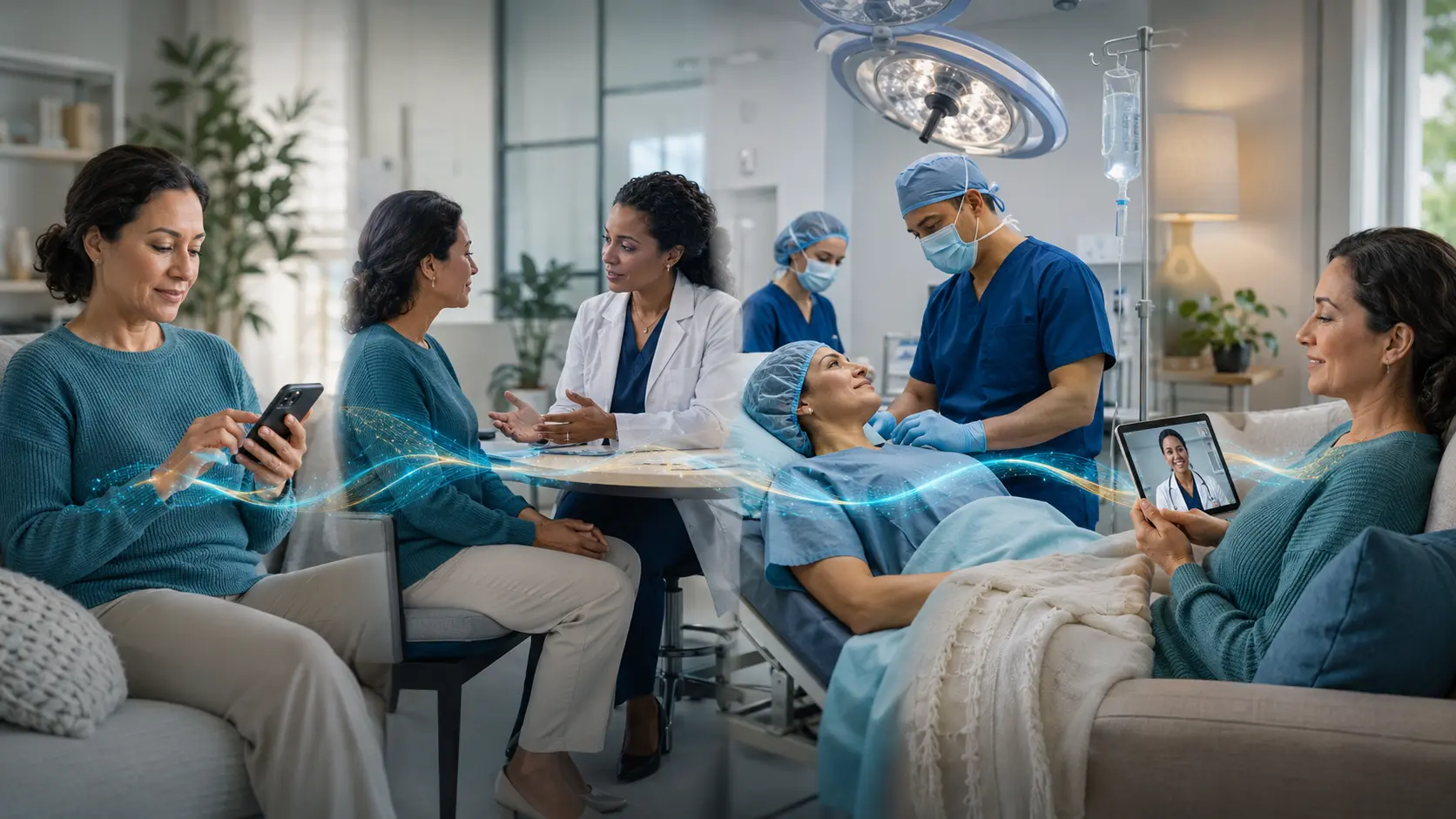
A representative view from each application — shown as product proof, one at a time.
Hub — the administrative control plane for organizations, sites, teams, governed access, and application provisioning across the network.
View ProductScheduling, intake, clinical care, surgery, billing, and recovery stay connected without re-keying the chart.
A modernized clinical knowledge layer of structured concepts supports histories, findings, assessments, procedures, and care plans.
Summaries, drafts, suggestions, and prioritization remain subject to clinician or qualified staff review. People own every consequential decision.
Role-based access, organization isolation, audit controls, server-side AI keys, and data portability mechanisms across the network.
One operational foundation — Hub and Forge — with the specialty applications your clinicians actually need, instead of a generic record with add-on templates.
Mind provides psychiatric, psychological, therapy, and neurological documentation with structured assessments, safety workflows, and TeleMed on the shared record.
Revela carries the entire aesthetic journey — consultation through outcomes — while Forge handles proposals-to-billing operations and Companion supports recovery.
ASC runs the facility floor; Continuum owns the perioperative clinical record. Cases, documentation, and charges stay reconciled to one encounter.
Hub provisions applications, roles, and access across every site with organization isolation, consistent navigation, and centralized administration.
Companion on iOS and Android — keeps patients prepared, informed, and connected — in English, Spanish, or French — before the visit and throughout recovery.
PatientTrac began in 1998 as a clinician-designed specialty documentation system built around structured clinical data. That same clinical philosophy now powers a cloud-native network connecting intake, specialty care, surgery, revenue cycle, and recovery.
We will map PatientTrac to your specialty, locations, roles, clinical workflows, and recovery journey — and show the applications working on one shared record.
Prefer email? Write to sales@patienttrac.com.